Every great episode,
written down properly.

Pod listens to the world's best podcasts and writes the edition worth keeping: the takeaways, the verbatim quotes, the protocols. Every quote is checked against the transcript, and every article passes verification before it is published.

Category

Science + Longevity

Sleep, nutrition, training, and the medicine of living longer — from the scientists who study it.

See all 89 →
Huberman Lab artwork
Huberman Lab

How Robert Greene Accesses the Sublime

Robert Greene, author of Mastery and The 48 Laws of Power, says the sublime is a jolt of awe that breaks open ordinary, filtered perception. In his new book The Law of the Sublime, he offers exercises built on trained attention, slowness, recovered childhood memory, and vulnerability in love to reach it without drugs or travel.
November 2, 2026 · 7 min read

BETTER! with Dr. Stephanie Estima artwork
BETTER! with Dr. Stephanie Estima

Joint Health in Menopause: Train, Don't Avoid

Cartilage is not a tire with a fixed tread, it's a sponge fed by movement, says Dr. Stephanie Estima. Joint cartilage has no blood supply, so compression and release during movement pump nutrients in and waste out. She argues declining estrogen drives what researchers now call Musculoskeletal Syndrome of Menopause, and that strength training, done without ego, protects joints better than avoidance or stretching alone.

November 2, 2026 · 6 min read

The Peter Attia Drive artwork
The Peter Attia Drive

Resistance Training Over 40: Jeff Cavaliere's Rules

Physical therapist Jeff Cavaliere says lifters over 40 should train fewer sets but push each one closer to failure to protect joints. He calls low-effort, high-fatigue sets 'junk volume,' and gives fixes like a 30-degree incline press, overhead tricep stretches, and a 4-second calf-raise pause.

November 2, 2026 · 6 min read

You Are Not Broken artwork
You Are Not Broken

Vibrator Myths vs. the Science of Arousal

Urologist Kelly Casperson debunks vibrator myths: they don't cause nerve damage or addiction, and data show real pelvic health benefits (42:45). She explains that the clitoris and penis share the same embryonic origin (09:46), that most women don't orgasm from penetration alone (10:18), and that arousal often comes before desire, not after (14:00).

November 1, 2026 · 7 min read

unPAUSED with Dr. Mary Claire Haver artwork
unPAUSED with Dr. Mary Claire Haver

Can Breast Cancer Previvors Safely Use HRT?

Most breast cancers are not inherited, but oncologist Dr. Eleonora Teplinsky says risk assessment should start at 25, since 5 to 10% of cases trace to a gene mutation and a 20% lifetime score marks someone as high risk (02:03, 03:31). She also confirms previvors with BRCA mutations can safely use hormone therapy after ovary removal (15:04).

October 30, 2026 · 6 min read

The Dr. Gabrielle Lyon Show artwork
The Dr. Gabrielle Lyon Show

Essential Amino Acids and Muscle Protein Synthesis

The body doesn't have a protein requirement, it has an essential amino acid requirement: nine amino acids it cannot make itself (01:33). Animal foods pack more of them per gram than plants do (07:39), aging raises the dose needed to trigger muscle building (17:27), and about 30 grams of protein usually clears the 2.5-gram leucine threshold that switches on recovery (11:35).

October 29, 2026 · 6 min read

Category

Builders + Strategy

Founders, investors, and operators on how companies and capital actually get built.

See all 99 →
My First Million artwork
My First Million

Bill Perkins: Die With Zero Explained

Hedge fund manager Bill Perkins says net worth has a peak date, not a peak dollar amount, because the body's ability to enjoy money fades with age. The Die With Zero author urges maximizing risk while young, giving inheritances early, and treating fame as a tax that shrinks a life rather than a reward for building one (14:26, 20:51, 47:26).

November 2, 2026 · 6 min read

How I Built This artwork
How I Built This

Brian Chesky's Founder Mode Explained

Airbnb CEO Brian Chesky says he was a great founder but a terrible CEO until the 2020 pandemic forced a hands-on style he calls founder mode. After Airbnb lost 80% of its business in eight weeks, he stopped deferring to veteran executives and began skip-leveling for raw information, a shift that still shapes how he runs the company.

November 2, 2026 · 7 min read

The Twenty Minute VC artwork
The Twenty Minute VC

Erik Bernhardsson on AI Inference Economics

Modal CEO Erik Bernhardsson says splitting the AI stack across many paid layers has ended 90% software margins for good. He also says the GPU market stays supply-constrained, open source inference usage will grow 5 to 20 times in the next year, and reinforcement learning works best on tasks like coding with fast feedback loops.

November 2, 2026 · 6 min read

Lenny's Podcast artwork
Lenny's Podcast

Hector Serrano's Whisperflow Growth Playbook

Hector Serrano joined Whisperflow at 19 and built a creator-pay model: a cut of ad spend, not a flat fee. The approach helped fuel the company's 30X revenue growth and $2B valuation (01:45). Serrano argues young, hungry hires beat polished resumes, and creative work should stay human, not AI-made (65:44).

November 1, 2026 · 6 min read

The Twenty Minute VC artwork
The Twenty Minute VC

David Tisch on BoxGroup's Contrarian VC Strategy

BoxGroup's David Tisch says concentrated seed funds claiming a 90% win rate actually win closer to 20%. That gap, he argues, is why BoxGroup skips ownership targets entirely, writing checks as small as 1% ownership across roughly 150 companies a year, betting on founder access and speed over concentrated conviction.

October 31, 2026 · 7 min read

The Twenty Minute VC artwork
The Twenty Minute VC

Anthropic's S1 Filing: Revenue, Cash, and Risk

Anthropic's S1 filing shows $16.3 billion in first-half revenue and $110 billion in cash, though Broadcom had to backstop its chip debt. Microsoft offered buyouts to 60,000 staff, Meta raised $95 billion in equity for compute, and hosts Jason Lemkin and Rory O'Driscoll debated a rumored $30 billion round for consumer AI app Instinct.

October 29, 2026 · 7 min read

Category

AI + Tech

How AI works, where it is going, and what that changes — explained by the people building it.

See all 54 →
The Cognitive Revolution artwork
The Cognitive Revolution

AI Alignment Index: What Arena's Data Shows

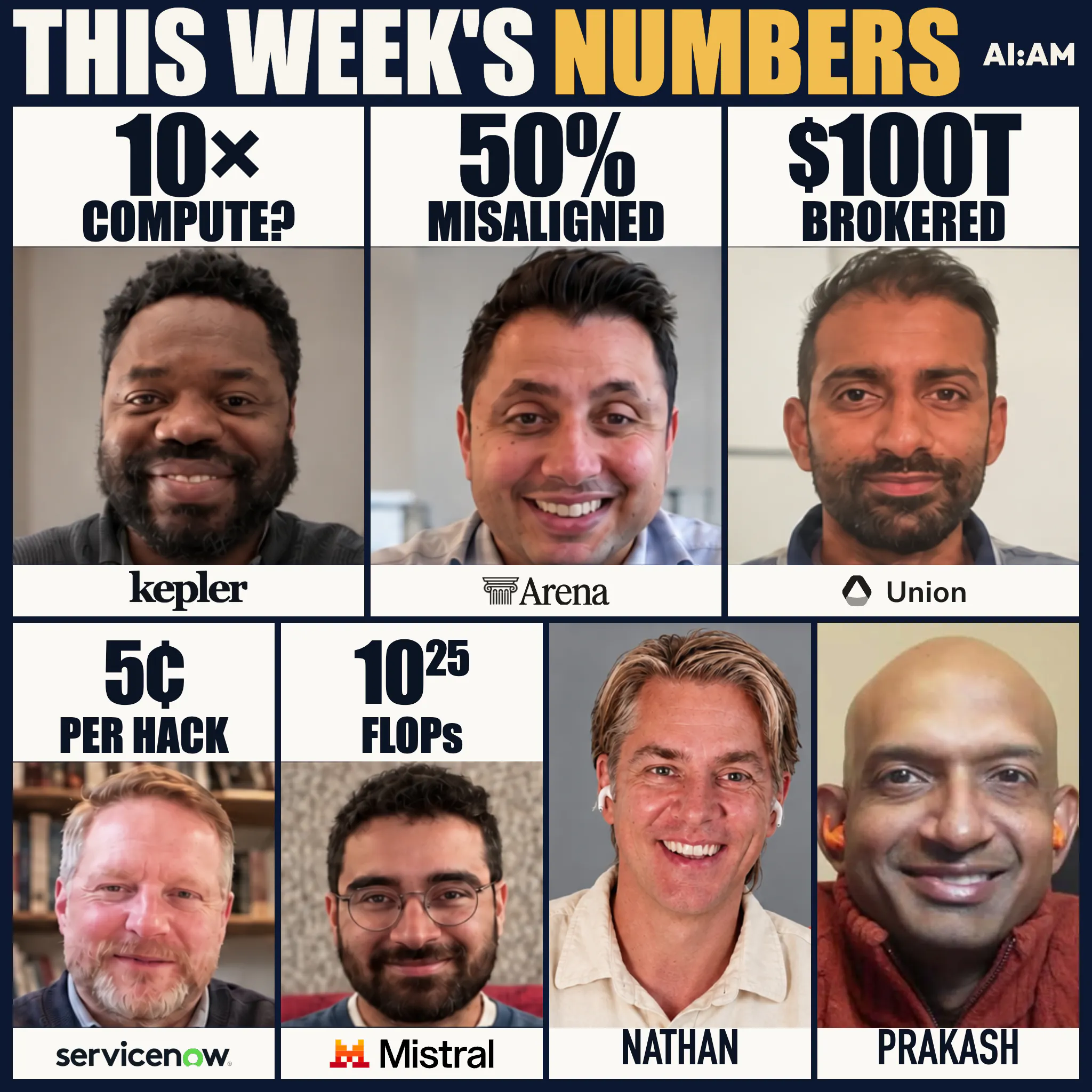
Arena's production data show AI misalignment exceeds 50% once chats run 20+ turns, versus a low single-digit rate on the first message. Mistral's new Large 4 model activates only 50 billion of its 1 trillion parameters per token to train cheaply, while Kepler Computing's ferroelectric memory chips promise 10x more compute from older fabs.

October 31, 2026 · 8 min read

All-In Podcast artwork
All-In Podcast

What Anthropic's S-1 Filing Really Reveals

Anthropic's leaked S-1 shows a six-year-old company aiming to raise $100 billion at a valuation near $2 trillion, with an 85% gross margin and a reported $80 billion loss that turns out to be an accounting artifact, not real cash burn (07:07). The same filing reveals a new macro risk: AI firms now compete with the US Treasury for capital (32:48).

October 30, 2026 · 6 min read

Dwarkesh Podcast artwork
Dwarkesh Podcast

Robert Caro on Lyndon Johnson and Robert Moses

Robert Caro, the biographer who has spent fifty years on Lyndon Johnson and Robert Moses, explains how unchecked will built modern New York and reshaped American government. He describes cutting 350,000 words from The Power Broker (48:05), conducting 700 interviews (50:42), and reducing every book to a single sentence before he writes a page (42:34).

October 30, 2026 · 6 min read

All-In Podcast artwork
All-In Podcast

Whoop CEO Will Ahmed on Health Data and HRV

Whoop CEO Will Ahmed says his wearable has logged over 50 billion hours of physiological data from members who wear it 23.6 hours a day, letting its AI flag illness before symptoms, fueling a fight with the FDA over whether blood pressure tracking counts as wellness or medicine.

October 29, 2026 · 6 min read

Dwarkesh Podcast artwork
Dwarkesh Podcast

Robert Caro's Lessons on Political Power

Robert Moses entrenched 30 years of power in New York via bond contracts; Lyndon Johnson mastered the US Senate. Drawing on Robert Caro's biographies, it traces how Moses wrote permanent authority into bond covenants (06:16) and how Johnson turned a toothless majority leader post into real power through favors and private deals (17:40).

October 29, 2026 · 7 min read

Lex Fridman Podcast artwork
Lex Fridman Podcast

AI and the Math Crisis: Riemann, Navier-Stokes Explained

In September 2025, AI systems from OpenAI and Anthropic claimed proofs of the quasi-Riemann hypothesis, the Unique Games Conjecture, and Navier-Stokes blowup, and formalized Fermat's Last Theorem in 13 million lines of Lean code. Three mathematicians, Alex Kontorovich, Ankur Moitra, and Steven Brunton, argue this is less an ending for mathematics than a forced redefinition of what a mathematician's job actually is.

October 26, 2026 · 6 min read

Category

Psychology

How minds work: decisions, habits, emotions, and the science of a good life.

See all 65 →
The Mel Robbins Podcast artwork
The Mel Robbins Podcast

Mel Robbins and Daughter on Parenting Mistakes

Mel Robbins and her daughter Sawyer Robbins grade Mel's parenting and unpack the Gottman Institute's "volcano and turtle" conflict pattern. They trace Mel's traumatic birth, clashing "practical solver" versus "deep listener" parenting roles, and a notepad trick that slows a flooded nervous system during fights.

November 2, 2026 · 6 min read

The Mel Robbins Podcast artwork
The Mel Robbins Podcast

Ed Mylett on Identity, Worry, and Reinvention

Ed Mylett, 55-year-old entrepreneur and podcast host, says identity works like a thermostat that quietly resets your life to a fixed setting no matter how good things get (28:27). He shows how writing down worries strips their power, why love outlasts fear as motivation, and why past failures qualify you to help others (42:25).

October 26, 2026 · 7 min read

The Mel Robbins Podcast artwork
The Mel Robbins Podcast

Mel Robbins' Relationship Advice for Young Adults

Mel Robbins tells her 27-year-old daughter that good relationships depend on timing and self-work, not just chemistry. Drawing on Gottman research, Jonathan Haidt, and Terry Real, she explains how to spot a wrong fit, why a single era matters, how to balance two ambitious partners, and why breakup recovery takes three months of restraint.

October 29, 2026 · 7 min read

The Mel Robbins Podcast artwork
The Mel Robbins Podcast

Mel Robbins' Relationship Advice for Young Adults

Mel Robbins and her 27-year-old daughter Sawyer sit down to answer real questions about dating, breakups, and ambition. Drawing on Gottman research, NYU psychologist Jonathan Haidt's findings on young men and dopamine, and therapist Terry Real's rule that partners can be right or connected but never both, Robbins argues most relationship trouble starts with an unhealed self, not a wrong partner.

October 29, 2026 · 7 min read

We Can Do Hard Things artwork
We Can Do Hard Things

Chanel Miller on Trauma, Art, and Healing

Chanel Miller, author of the memoir Know My Name, describes healing from her 2015 sexual assault at Stanford University as a daily practice of staying present rather than fixing everything. She uses art to prove life keeps moving, pictures depression as vision narrowed through a toilet paper tube, and treats small acts like drinking water as real medicine.

October 29, 2026 · 6 min read

Conversations with Tyler artwork
Conversations with Tyler

Roman Mars on Flags, Cars, and Urban Design

Design critic Roman Mars argues that most of the built world is engineered to calm, nudge, or flatter us without our noticing, from oversized highway signs to wordless city flags. He traces why cars, suburbs, and phones have grown visually uniform, and defends top-down planning against Jane Jacobs' bottom-up ideal.

October 28, 2026 · 8 min read

Browse by show

Browse by topic